


Pounds of Waste Collected
Plants Planted
Square Meters Covered
Environmental Workshops
Total Number of People Reached
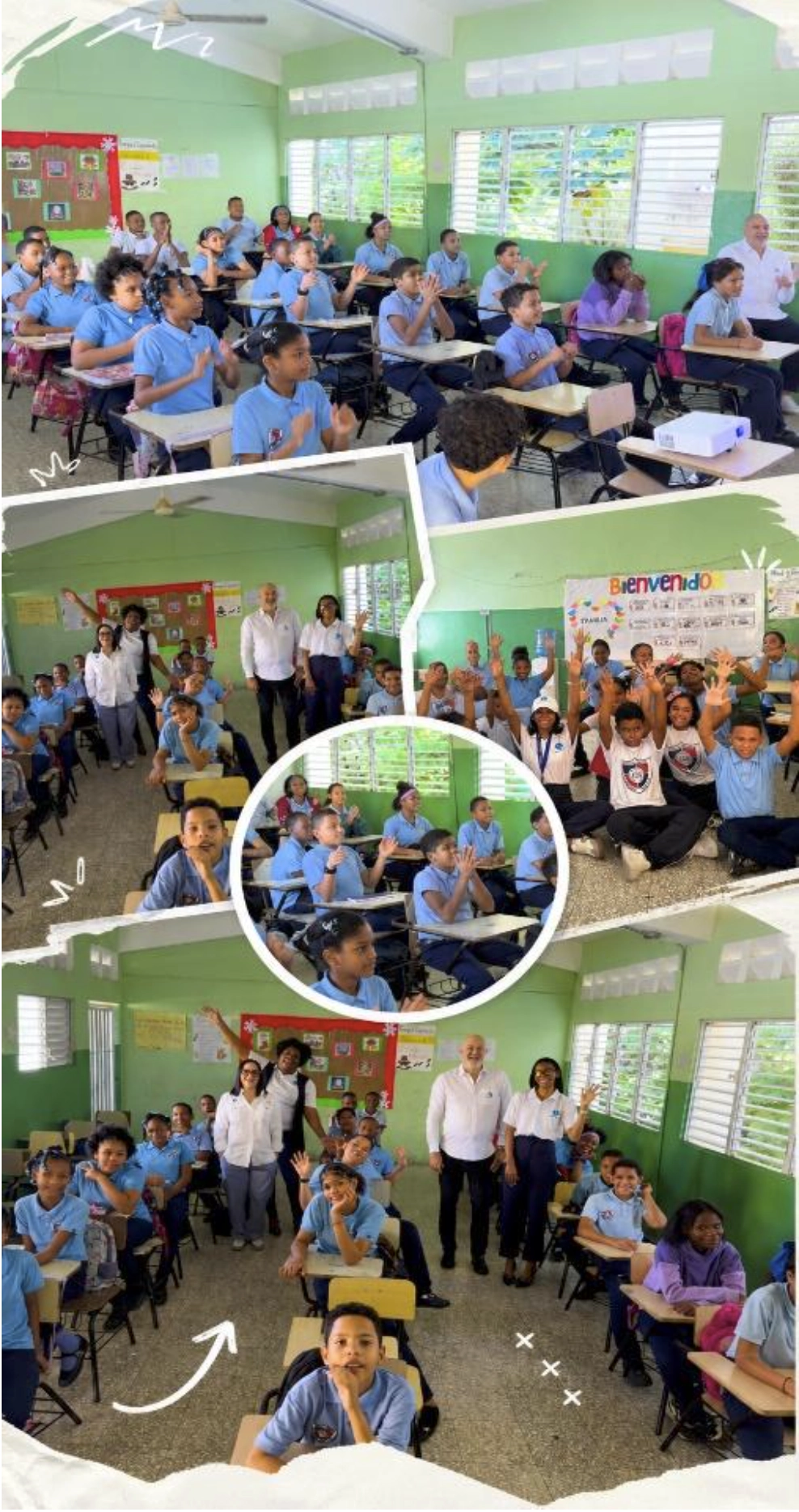
I CARE – MY SCHOOL
1. Student Leadership: Water Guardians Clubs.
2. School Governance: School Environmental Committees (CAE)
3. Waste Management and Traceability
Overall Objective
To strengthen the capacity of school communities linked to the river basins of the Dominican Republic to organize, educate, and take action in response to environmental problems in their territory, through student clubs, active School Environmental Committees, teachers capable of sustaining the process, and verifiable school environmental management practices.
Translated with DeepL.com (free version)
Our Partners
Public Sector
LOYOLA – URBE y Alcaldía del DN
A collaborative effort to create a 415-square-meter Miyawaki-style forest along the banks of the Ozama River, within the Nuevo Domingo Savio Linear Park. A total of 1,100 native and adapted plants were planted to promote biodiversity and ecological regeneration.
MEDIO AMBIENTE y DRAGAS
Collaboration on the responsible use of the CRDR boat for environmental monitoring of the Ozama and Isabela Rivers, including technical support, institutional coordination, and boat storage in Dragas.
Public Sector
NUVI
Promote the recycling of plastic bottles through NUVI collection points set up at the Advensus call center.
ADVENSUS
Recycling and environmental education are promoted at the Advensus call center, and volunteers from there participate in CRDR activities..
FUNDACIÓN LOYOLA
A collaboration to create a 415 m² Miyawaki forest and 150 m² of mangroves in the Nuevo Domingo Savio Linear Park, involving the planting of 1,100 native plants and more than 2,000 mangroves to promote biodiversity and ecological regeneration.
How We Work?
We address these challenges through a comprehensive approach that includes:
Monitoring and Restoration
We implement monitoring programs to assess the river’s health and carry out restoration projects aimed at rehabilitating critically degraded areas.
Education and Awareness
We conduct awareness campaigns to educate local communities on the importance of protecting the Isabela River and promote sustainable practices.
Collaboration with Key Stakeholders
We work closely with local governments, businesses, and other NGOs to foster policies and practices that contribute to the river’s protection and preservation